
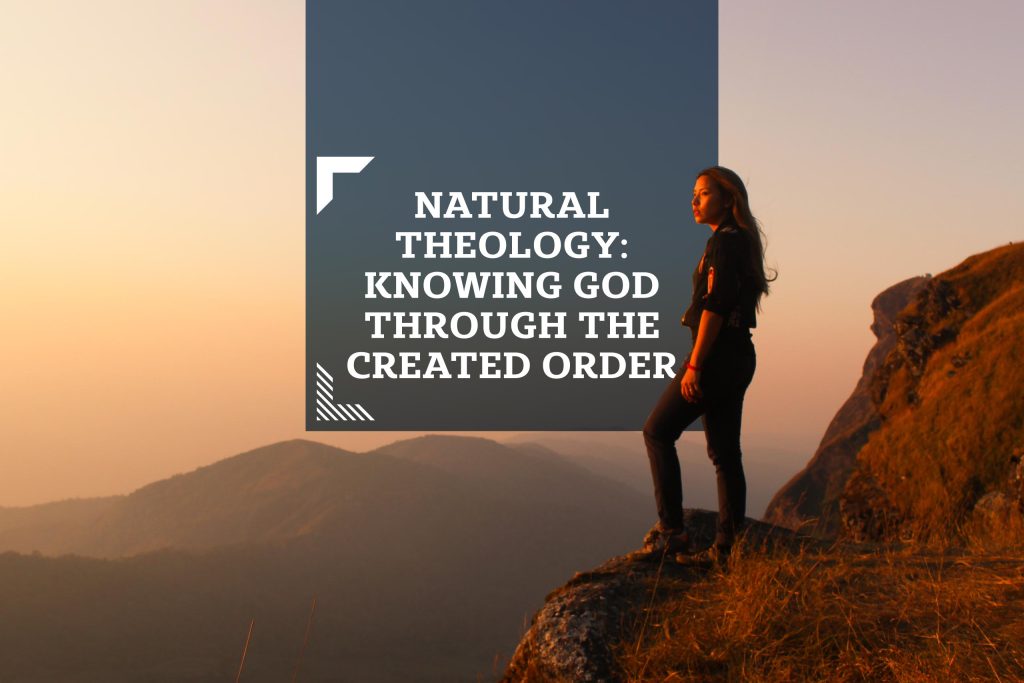
Do we know enough about the nature of God to be able to judge when Scripture talks properly about God, and when it speaks metaphorically about God? The key, among others, is Romans 1:20.: “For since the creation of the world, His invisible attributes are clearly seen, being understood by the things that are made, even His eternal power and deity.”
Notice what he doesn’t say. He doesn’t say they are understood by the exegesis of Scripture. Now, don’t get me wrong, I’m not opposed to the exegesis of Scripture, and I’m not saying the exegesis of Scripture isn’t part of our database in understanding how God has revealed Himself through His prophets and apostles, and ultimately through the Lord Jesus. Of course, that’s going to be the only infallible data we have about God that He has revealed to us. But what I am suggesting is that the same infallible, inspired Word of God is what tells us that we can know about God’s nature through His creation. That’s what it’s telling us, not just merely knowing His nature through the revealed truth of Scripture, but also through creation. So again, I’m not against exegesis of Scripture, but I’m saying that that’s not how the Scriptures tell us to settle the issue of the nature of God, at least in some respects.
In fact, it’s interesting in Romans, when Paul is giving this argument introduced around verse 18 of Romans chapter one, later in the chapter, when he indicts homosexuality, you notice he doesn’t appeal to Leviticus 20. Presumably, because maybe there was too large a contingent in the Roman church that didn’t know what Leviticus even was. What does he appeal to to tell the Romans that homosexuality is wrong? He says it is against nature. Now, the thing that’s significant about that is, no matter how much they may or may not have ever heard of Leviticus, none of those people can excuse themselves from being part of God’s creation. They’re still part of the way God has made the world, and so there are things about the way God has made the world that point to Him as its maker. Now, to be sure, there’s a lot to be said in terms of the theology of that, in terms of our rebellion against God, our animus towards God, our hatred of God as sinners, and the work that’s necessary for God through His Holy Spirit to draw us to Himself. That’s all part of it, but none of that evacuates the significance and role, in my judgment, of natural theology.
So that’s the key. Just a few examples: the heavens declare the glory of God, and the firmament shows His handiwork. The heavens declare His righteousness, and all the people see His glory. We see later on in Romans, as Paul continues his argument, that when he’s anticipating the objection from the Gentiles who might be reading or hearing his preaching, he anticipates the objection: “Well, what about the nations that weren’t there at Mount Sinai? They didn’t get the list of dos and don’ts; they didn’t get the commandment that said do not murder. So how could God possibly hold them responsible if they didn’t get the message and they weren’t there?” And Paul says no, the Gentiles who did not have the law did that which by nature was of the law, even though not having the law, they became a law unto themselves, and they show the work of the law.
This verse is almost always misquoted, by the way. So many people quote it as “the law is written on the heart.” No, it’s not the law that’s written on the heart, otherwise that would evacuate Paul’s argument, because he says the Gentiles don’t have the law. What’s written on the heart is the work of the law. What’s the work of the law? I submit to you, without argument here, the work of the law is the goal, it’s the teleology to which the law is pointing. It’s the righteousness of God that can be instantiated in us, of how God wants us to be and act. That’s what’s written in the heart. And then he goes on to build his argument throughout the rest of Romans two.
So, how did we get here? By observing the wonders of God’s creation, people have been and still can come to a basic and relatively sound understanding of God’s existence and attributes. I try to deal with some examples from Scripture of people who were not saved, didn’t have eternal life, yet you could tell God was working in their lives, and they were seeing these truths of God. The most conspicuous, I think, is Cornelius, who was a God-fearer. His prayers went up as a memorial before God. He wasn’t saved; he didn’t get saved until he heard the message and believed the gospel, yet you could tell something was going on. And I submit to you, part of at least what was going on was what he was able to apprehend about the Maker through the things that he could see, hear, taste, touch, or smell. Fine and good, a lot of people do that still today. Praise God that happens.
——————————
Visit https://ses.edu to learn more about our programs and courses.
Support a seminary that integrates philosophy, theology, and apologetics into one unified worldview. Give at: ses.edu/give
Follow us on social media:
- YouTube: https://www.youtube.com/@SouthernEvangelicalSeminary
- Facebook: https://www.facebook.com/sesapologetics
- X: https://x.com/sesapologetics
- Instagram: https://www.instagram.com/sesapologetics/
- LinkedIn: https://www.linkedin.com/school/sesapologetics/
- TikTok: https://www.tiktok.com/sesapologetics/
This article is based on a video transcript and does not necessarily reflect the official positions of SES. To watch the full video, click here: https://youtu.be/skUbQt9i5Tc?si=9K9x0dAg93s022Iz